
Morocco Guide: 15 Things Every Traveller Should Know Before Going to Morocco
- Apr 16, 2024
- 6 min read
Embarking on a journey to Morocco opens up a world of vibrant culture and traditions. Here's a guide to help you navigate this enchanting country with sensitivity and appreciation:

Dress Code
As a traveller, respecting local customs through your choice of clothing is a subtle tribute to the cultural tapestry of Morocco. Men enjoy flexibility in their attire, whilst women will find it respectful and often more comfortable to opt for attire that covers shoulders and knees. In the spiritual quietude of mosques, a shawl or scarf is essential for women to cover their heads, a gesture of reverence within these sacred spaces.
While you may notice some tourists in more revealing attire, adopting local dress customs and blending in with their norms is a gesture of respect to the country’s heritage. It’ll also detract from any unwanted hassling or looks.
The vibrant nightlife of cities like Casablanca or Marrakech invites a more liberal dress code, so feel free to indulge in your glamourous side here. Just remember, the night’s sparkle doesn’t dim the need for mindful travel on your way back to rest.
Language Nuances
Arabic, Berber, and French paint the everyday language scene in Morocco. A handy translation app or a pocket phrasebook could be your best companion, opening doors to authentic experiences and warm interactions. English have a presence in the larger cities like Casablanca and Marrakech, urban hotels and attractions, but when venturing into the heart of Morocco, you’ll find it's less common.
Currency Quirks
The Moroccan Dirham (MAD) reigns in this cash-preferred society. Keep smaller bills handy to smooth over transactions and avoid the awkward "no change" tango. Whilst credit cards are gaining ground in the city, the charm of rural markets and some accommodations still lies in their cash-only transactions.
If you didn’t prepay for your accommodations or tours, it would be advisable to find out if they accept cards. I have stayed at a few riads that were cash only or their credit card machine “doesn’t work today.”
*ATM Tip: Morocco's closed-currency policy, which means you can’t get hold of it outside the country, makes it challenging to exchange Dirhams before/after your holiday. So, withdraw cash as needed. You can find ATMs generously dotted across the landscape.
Visa and Passport Basics
A visa is typically not necessary- it is not needed if you hold a US passport but ensure your passport's validity extends at least six months beyond your journey.
Health Precautions
There aren’t specific vaccinations mandated for Morocco, unlike travelling to some other African countries, but always check for the latest health advice before travel.
Tipping Etiquette
Tipping isn't obligatory but is gratefully received. Morocco is considered a developing country, and the locals are typically very hospitable and provide a welcoming service. Here is a general guide for tipping:
Restaurants & cafes: 10% of the bill (some upscale establishments may add a service charge to the bill, so always check!)
Hotel service: 10-20MAD per service
Private tour guides: 100-200MAD per day
Tax Drivers: not mandatory to tip but it’s common to round up the fare
Safety and Scams
Morocco’s warmth is palpable through its friendly and helpful people, but as with any destination, keep your wits about you. Guard your belongings in crowded spots. Remember, you’re carrying cash on you, so it’d be wise to separate and place it in different places. You can consider carrying a money belt. (My boyfriend was hesitant to use one of those, but he said it was the best purchase he made for the trip.)
Be wary of scams as they can sour your whole experience. Be cautious of unsolicited “helpers” who will tell you’re going the wrong direction or the road is closed and then “guide” you to another route. They may seem extremely friendly and almost genuine in their attempt to help you - they will outright tell you, “I am not a scam, I am a local, and I just want to help.” Don’t fall for it! They will undoubtedly expect a payment and will make sure they get it.
Important: there’s no such thing as a “free tour”. Be very wary of accepting these offers. In worse scenarios, you may find yourself very lost following a stranger through the winding alleys or pressured into buying things when your guide gets you a “special rate just for you!”.
Navigating Transportation
Using taxis (also known as “petit taxi”) is a breath of fresh air in bustling cities like Casablanca and Marrakech. These small red taxis are convenient and the drivers are skilled at navigating the wild congestions, but ensure the fare is agreed upon upfront as meters are a rare sight and the same fare going there might not be the same fare coming back.
*Tip: it is completely okay to haggle and negotiate the fare before hopping in the taxi, but make sure you have the exact cash, otherwise, you may find the driver suddenly “out of change.”
On the Road
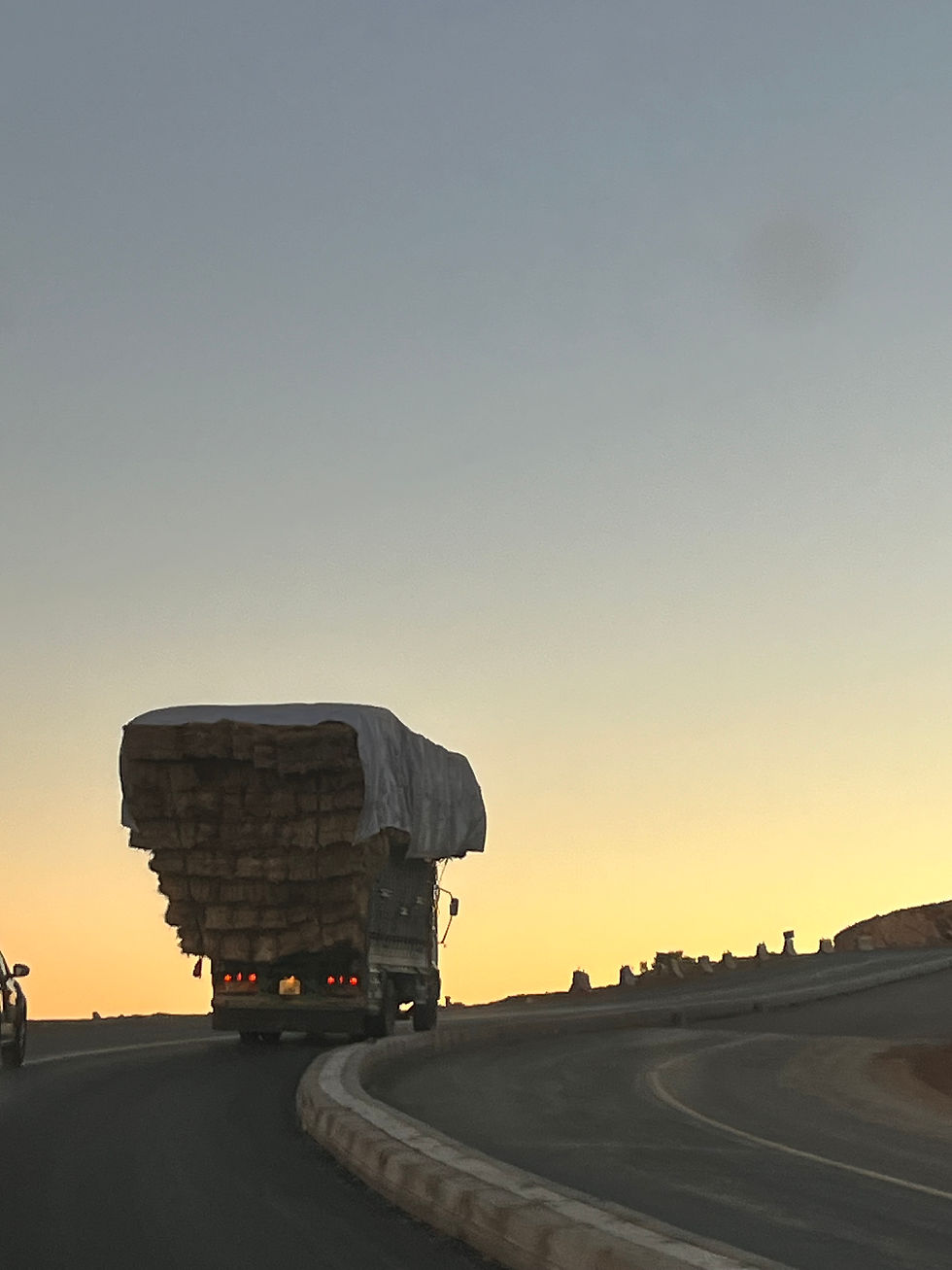
Driving mirrors the US system, which means you’re driving on the right side of the road. Whilst the roadways are in good shape, patience is your co-pilot, especially near schools and in townships. Moroccans have an unhurried pulse – speed limits are conservative, and fines are enforced strictly. There are police checkpoints near every township and in my experience, found mainly stationed around the turnabouts.
Don’t be alarmed by the sign of solitary figures or hitchhikers as you are driving. This is very common. In more rural parts of the country, having a car is uncommon, thus walking, bicycling, or donkey riding are the main forms of transportation.
Also, don’t be alarmed when you see small children walking without adult supervision. This is also very common as they are likely walking to/from school.

Haggling and Shopping
The art of negotiation is alive in the medinas; haggling isn’t just expected, but it’s an art form. Start low, hold firm, and be prepared to walk away. Here are a few tips:
- Bring the initial price down to 30% and you’ll likely settle around the 40% mark. If you don’t get the price you want, don’t worry – just walk away. You’ll either find the same item in another stall or the owner will yell after you with your offered price.
- Don’t purchase any items at the entrance of the medinas. Trust me, you’ll find the same items when you go further inside. The markup price in the first few stalls is unbelievably high.
Haggling is much harder, almost non-existent, when you walk into any well-established Moroccan rug store. You can try though!

Culinary Cautions
Quench your thirst with bottled water, not from the tap. Almost all hotels and restaurants/cafes will provide you with bottled water.
While alcohol isn’t a local staple, it is accessible to tourists. Larger cities like Casablanca, Fes, and Marrakech will serve alcohol everywhere, but you’ll likely have trouble finding a beer in the smaller towns.
Fun fact: Although locals don’t consume alcohol, Morocco actually produces their own wine. There are 2 wine regions in the country and the wine is good!
Moroccan dishes are cooked with heaps of different spices. Cumin is one of the main spices used. If you don’t like cumin, sadly, you may not be able to enjoy the full Moroccan cuisine experience.
If it can be avoided, don’t consume street food or fruit juices/smoothies. It might be delicious and authentic, but the worst scenario during a holiday is to get food poisoning.

Allergies
Cat lovers rejoice; feline friends abound. But for those with allergies, antihistamines will be a necessity. Cats are everywhere and freely walk in and out of establishments. Nut allergies also warrant a heads-up to your servers, as nuts are a common culinary accent.
Photography Protocol
Capture Morocco’s vibrancy with permission. People may request payment for photos, particularly in tourist-frequented areas like Marrakesh Medina.

Religious Observances
Nearly 99% of the population is Muslim. Fridays, not Sundays, are their Holy day of rest and for spiritual reflection. You may find many attractions closed and shopping options to be limited.
Most mosques are off-limits to non-Muslims, except the Hassan II Mosque in Casablanca.
Extra Essentials:
- Use your right hand for greetings, transactions and eating. In Moroccan culture, the left hand is traditionally considered unclean.
- Shoes off is a sign of respect in homes and sacred places.
- Exteriors may be deceiving – the real beauty often lies within.
- “Balak!” means step aside in the medinas when scooters or mules/donkeys pass by.
As you set out to explore Morocco, I hope this guide will be your compass to a respectful, safe, and utterly mesmerising adventure. Morocco has so much to offer, don’t let the “be aware” deter you from experiencing everything. Happy travels! Xx
PS. To see more of Morocco, check out my YouTube video!


.png)